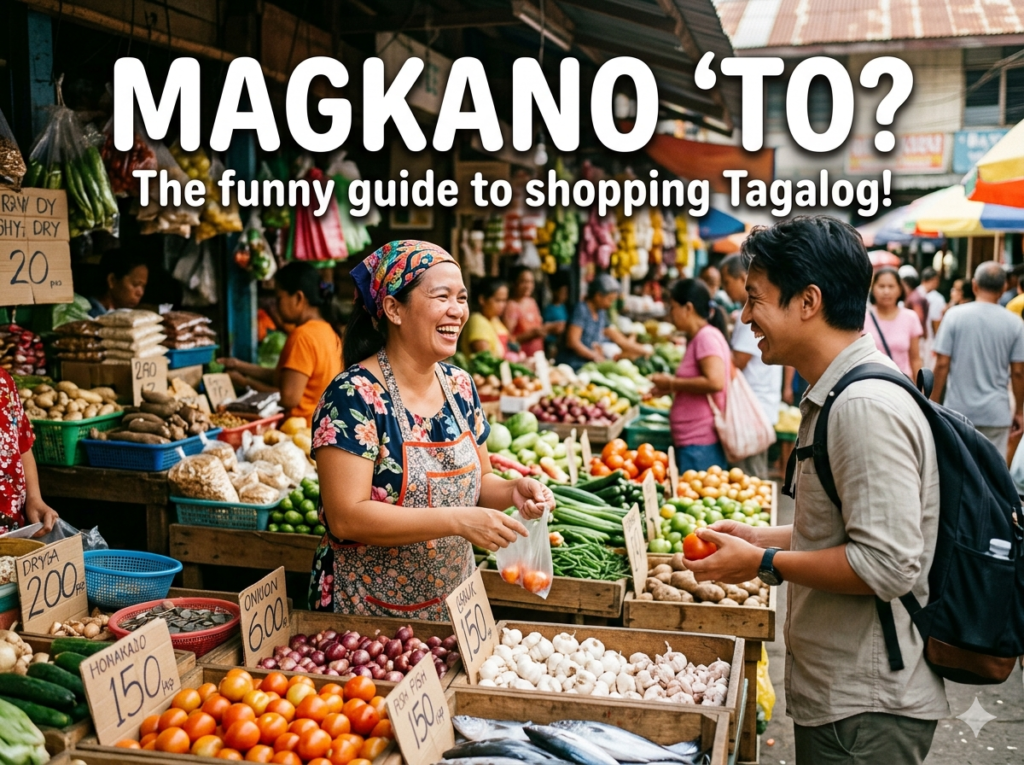

Navigating a busy Philippine palengke (wet market) or tiyangge (flea market bazaar) becomes a whole lot easier—and much more fun—when you drop a few local words. Filipino market vendors (tindera for women, tindero for men) love it when travelers make an effort to speak Tagalog, and it can often land you a better deal.
To help you seamlessly blend in, add “po” to the end of your sentences. It is the golden word for showing politeness and respect in the Philippines.
1. Inquiring About Prices
Before you reach for your wallet, use these essential phrases to figure out the cost of things:
- “Magkano po ito?”
- Pronunciation: Mahg-kah-noh poh ee-toh?
- Meaning: How much is this? (The absolute most important phrase you will need).
- “Magkano po ang kilo nito?”
- Pronunciation: Mahg-kah-noh poh ahng kee-loh nee-toh?
- Meaning: How much per kilo for this? (Essential for fruits, vegetables, meat, and seafood).
- “Magkano po ang lahat?”
- Pronunciation: Mahg-kah-noh poh ahng lah-haht?
- Meaning: How much for everything? (Use this when you have gathered a pile of items from a single vendor and are ready to total it up).
- “Ano po ito?”
- Pronunciation: Ah-noh poh ee-toh?
- Meaning: What is this? (Great for when you spot an unfamiliar tropical fruit or unique local snack).
2. Expressing Intent to Buy
When you are ready to make your selection, flash these quick phrases:
- “Pabili po.”
- Pronunciation: Pah-bee-lee poh.
- Meaning: I’d like to buy, please. (This is what you call out when walking up to a market stall to get the vendor’s immediate attention).
- “Ito na lang po.”
- Pronunciation: Ee-toh nah lahng poh.
- Meaning: Just this one, please.
- “Isang kilo nga po nito.”
- Pronunciation: Ee-sahng kee-loh ngah poh nee-toh.
- Meaning: One kilo of this, please. (You can swap isang with kalahating [kah-lah-hah-teeng] if you only want half a kilo).
3. The Art of Haggling (Tawad)
Bargaining is expected in flea markets, clothing bazaars, and sometimes when buying raw food items in large bulk. Use these words to gently negotiate:
- “Mura” vs. “Mahal”
- Pronunciation: Moo-rah / Mah-hahl.
- Meaning: Cheap / Expensive.
- “Ang mahal naman po!”
- Pronunciation: Ahng mah-hahl nah-mahn poh!
- Meaning: Wow, that’s so expensive! (Say this with a lighthearted, playful tone—never angry or confrontational).
- “Wala na po bang tawad?”
- Pronunciation: Wah-lah nah poh bahng tah-wahd?
- Meaning: Is there no lower price? / Can I get a discount?
- “Pwedeng bawas?”
- Pronunciation: Pweh-dehng bah-wahs?
- Meaning: Can you deduct a little bit?
4. Handling the Transaction & Change
Once the price is set, use these financial transactional phrases to wrap up:
- “Bayad po.”
- Pronunciation: Bah-yahd poh.
- Meaning: Here is my payment. (Say this as you hand over your cash).
- “Sukli po.”
- Pronunciation: Sook-lee poh.
- Meaning: My change. (As in, checking on the money returned to you).
- “Sa inyo na lang po ang sukli.”
- Pronunciation: Sah een-yoh nah lahng poh ahng sook-lee.
- Meaning: Keep the change. (A fantastic way to show appreciation to a hardworking vendor).
The Ultimate Market Secret: The “Suki” System
Suki (Soo-kee) is a beautiful Filipino cultural term that translates to a “regular customer” or a “trusted vendor.”
If you visit the exact same vegetable or fish vendor twice during a short vacation, look at them with a smile and say, “Suki na tayo, ah!” (We are regular partners now!). Once a vendor establishes you as their suki, they will automatically give you the best cuts of meat, the freshest fruits, hidden discounts, or throw in a few extra pieces of produce into your bag for completely free (dagdag).