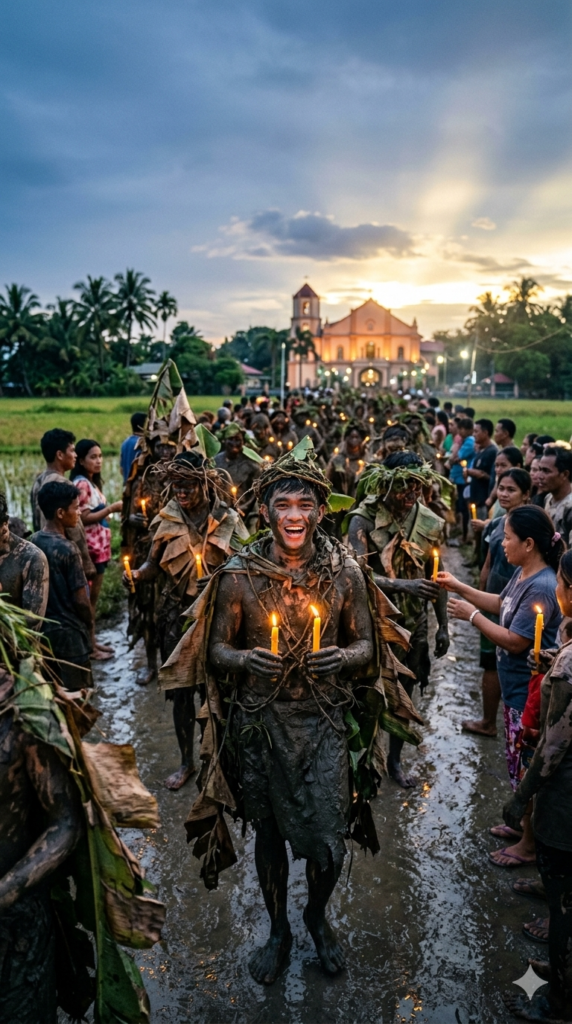

The morning air in the quiet village of Bibiclat is thick with mist, but you are not thinking about the chill. Your eyes are fixed on a crowd of figures emerging silently from the rice fields, completely covered from head to toe in thick, grey mud and draped in dry banana leaves. They walk with an eerie, collective serenity, carrying candles and chanting prayers in honor of Saint John the Baptist. Witnessing this raw display of faith sends a shiver down your spine. It is visceral, ancient, and deeply moving. This is not a performance for tourists—it is a centuries-old spiritual vow.

If you stay in your comfortable city routine, you will only ever see this through a glass phone screen. You will miss the chance to feel the ground shake under your feet, to smell the wet earth, and to capture that single, perfect shot that tells a story words never could. Don’t be the traveler who looks back and realizes they missed out on one of the most unique cultural transformations in the Philippines.
The biggest challenge when traveling to Aliaga, Nueva Ecija for the Taong Putik Festival on June 24th is the severe lack of tourist infrastructure in the immediate village. There are no high-end hotels next to the rice fields, and if you don’t plan your stay properly, you risk a sleepless night or a grueling multi-hour commute in the dark before dawn.
Here is the exact blueprint to solve your logistics, find premium comfort, and experience the festival perfectly.
Where to Stay: Your Sanctuary of Comfort and Convenience
Because Bibiclat itself lacks commercial hotels, the smartest move is to base yourself in nearby Cabanatuan City, just 30 to 45 minutes away. The premier choice for travelers seeking a balance of luxury and local accessibility is The Harvest Hotel.
The Experience and Benefits
Choosing a hotel isn’t just about a place to sleep; it is about protecting your peace and energy. After spending your morning in a humid, muddy field, returning to an air-conditioned room with high-speed Wi-Fi is an absolute game-changer.
- Restorative Comfort: Sleep deeply before your early morning wake-up call on crisp, premium white linens. The plush mattress setup ensures you wake up fully energized.
- Flawless Connectivity: The high-quality Wi-Fi allows you to immediately upload your high-resolution festival reels without lag.
- Premium Relaxation: After a long day of walking, wash away the dust in a luxury hot shower, or lounge by the outdoor swimming pool surrounded by manicured greenery.

Pros and Cons
- Pros: Secure private parking, excellent on-site international and local restaurant, beautiful modern pool area, highly professional and safe security detail, close to central transport terminals.
- Cons: Room rates are higher than basic highway motels; requires a 35-minute drive to the festival site on the morning of June 24th.
Pricing Observations and Comparison
While a basic roadside inn in Nueva Ecija will cost you around PHP 1,200 to PHP 1,800 a night, you compromise heavily on safety, bed comfort, and water pressure. The Harvest Hotel typically ranges from PHP 3,800 to PHP 5,500 per night depending on the room class. The price difference translates directly into premium safety, a fantastic breakfast buffet, and absolute peace of mind.
The Taong Putik Festival Schedule & Itinerary
The festival is a single-day peak event on June 24th, but the energy builds the night before.
2-Day High-Efficiency Itinerary
Day 1: Arrival & Culinary Preparation
- 2:00 PM: Check into your hotel in Cabanatuan. Unpack, settle in, and test your gear.
- 4:00 PM: Head out to explore nearby historical sites, such as the Camp Pangatian War Memorial Shrine, a deeply moving historical site honoring WWII heroes.
- 6:30 PM: Dinner at a local bistro to try authentic Nueva Ecija cuisine. Drop by a local restaurant to order Pancit Cabagan or savory local Longganisang Cabanatuan (garlic-heavy local sausages).

Day 2: The Festival Ritual
- 4:00 AM: Wake up early, pack your camera gear in water-resistant bags, and take your private transport to Barangay Bibiclat, Aliaga.
- 5:00 AM – 7:00 AM: Arrive at the rice fields just as light breaks. Watch the devotees rub mud over their skin and wrap themselves in vines and leaves. Follow the silent procession to the Saint John the Baptist Church.
- 8:30 AM: Attend the unique festival mass where the mud-covered devotees fill the pews.
- 11:00 AM: Return to the hotel to wash up, enjoy the swimming pool, and check out refreshed.
Transportation Strategy
- Getting There from Manila: Take a premium point-to-point (P2P) bus or standard air-conditioned liner (like Five Star or Baliwag Transit) from Cubao to Cabanatuan City (3-4 hours).
- Getting to the Festival Site: On the morning of June 24th, public tricycles are scarce at 4:30 AM. It is highly recommended to arrange a private tricycle or van rental through your hotel front desk the afternoon before. Ensure you agree on a round-trip rate that includes the driver waiting for you at a designated landmark outside the immediate festival gridlock.
Social Proof: What Travelers Say
“I thought the mud festival would just be a chaotic street party, but standing in the fields at 5 AM while the devotees silently prayed was a spiritual experience. Staying in Cabanatuan was the best decision we made—having a clean bed and hot shower to return to made the trip perfect.” — Marcus T., Travel Photographer
Who This Strategy is Best For
This itinerary and accommodation plan is ideal for cultural travelers, documentary photographers, and family groups who want to experience authentic, off-the-beaten-path Philippine festivals without sacrificing personal safety, clean facilities, and restful sleep.ill remember for the rest of your life.