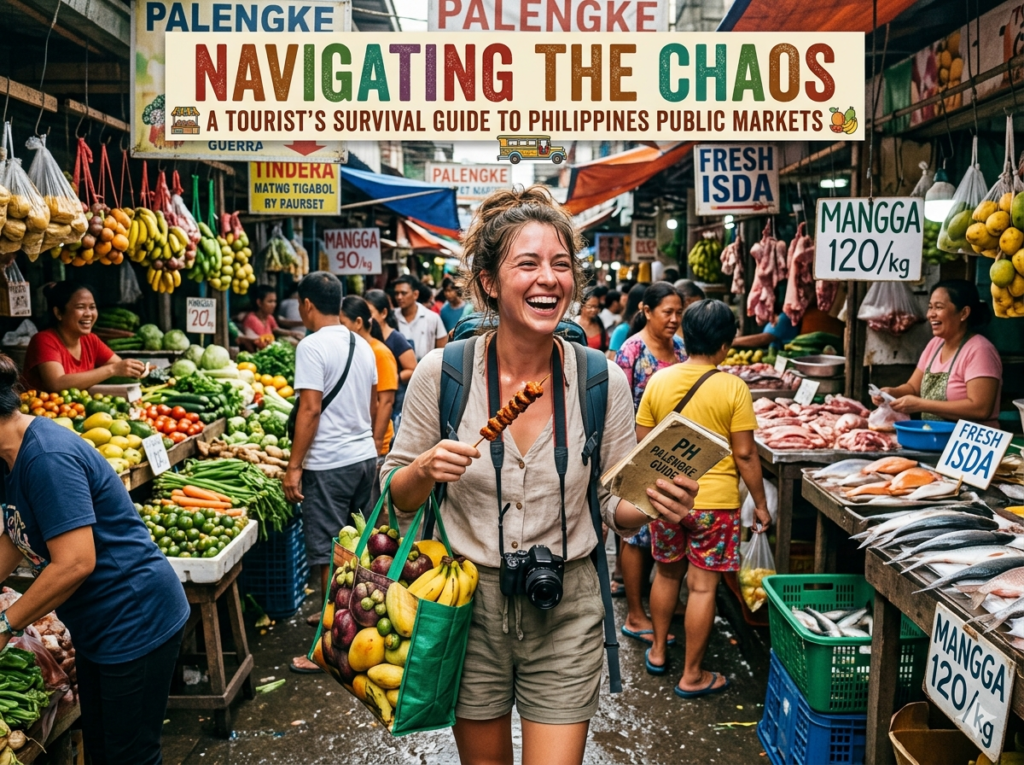

For many travelers, the true heartbeat of a new country is not found inside its air-conditioned shopping malls, but within its local public markets—vibrantly referred to in the Philippines as the palengke.
However, first-time international visitors often run into a distinct wet market traveler problem: overwhelming sensory overload. The combination of shouting vendors, labyrinthine wet floors, lack of fixed price tags, and aggressive crowds can cause a tourist to turn around and head right back to the safety of a supermarket.
Skipping the palengke means missing out on the freshest local ingredients, cheapest regional delicacies, and most authentic cultural interactions in the country. To help you trade anxiety for adventure, here is your essential tourist guide to navigating two of the most iconic public markets in the Philippines like a seasoned local.
1. Carbon Market (Cebu City)
As the oldest and largest public market in the Central Visayas region, Carbon Market has been the commercial soul of downtown Cebu for well over a century. Named after the old coal (carbón) depots from the steam-powered railway era, it spans multiple city blocks near the busy shipping ports.
What to Look For
Carbon is a massive supply hub divided into distinct units. Foodies should seek out the vibrant fruit sections loaded with sweet Carabao Mangoes and regional produce.
If you want a truly local snack, look for vendors selling Pusô (hanging rice wrapped in woven coconut palm fronds) alongside freshly grilled meats. Nearby, the Pusô Village food hub blends traditional market eats with a cleaner, street-food courtyard style layout.
Insider Survival Tip
Because Carbon is a major active logistics hub for the region, it is constantly moving. Watch out for kargadors (porters) carrying heavy sacks of produce or pushing wooden carts—they have the right of way! Give them plenty of space to pass.
2. Baguio Public Market (Baguio City)
If you travel north up into the misty mountains of the Cordillera region, the Baguio Public Market offers a stark, refreshing contrast to the humid, coastal markets of the lowlands. It is famously recognized as one of the cleanest and most organized public markets in the Philippines.
What to Look For
Thanks to the cool highland climate, this market is a treasure trove of agricultural items that struggle to grow elsewhere in the country.
- The Strawberry Section: Rows of bright, locally grown strawberries, sweet strawberry preserves, and even fresh strawberry wine.
- The Souvenir Section: Exceptional, high-quality handwoven textiles from Cordilleran tribes, hand-carved wooden home decor, and affordable mountain coffee beans (like Sagada Arabica and Benguet Robusta).
Insider Survival Tip
While prices here are competitive, do not aggressively haggle over small change. The highland farmers and indigenous weavers work incredibly hard, and prices are already very reasonable compared to standard retail outlets.
Essential Palengke Etiquette & Logistics
To ensure your market exploration goes smoothly, keep these basic baseline rules in mind:
| Strategy | Action Plan |
| Dress Appropriately | Wear closed-toe shoes with good grip. The floors of the fish and meat sections (the “wet market”) can be slippery and damp. Leave your flashy jewelry and expensive watches at the hotel. |
| Bring Cash Small Change | Vendors will struggle to give change for large PHP 1,000 bills if you are only buying a PHP 50 snack. Keep plenty of PHP 20, 50, and 100 bills handy in an accessible pouch. |
| Timing is Everything | For the absolute freshest seafood and meat, arrive between 5:00 AM and 7:00 AM. If you prefer fewer crowds and heavily discounted prices on leftover fruits and vegetables, aim for the late afternoon “bagsakan” hours. |