
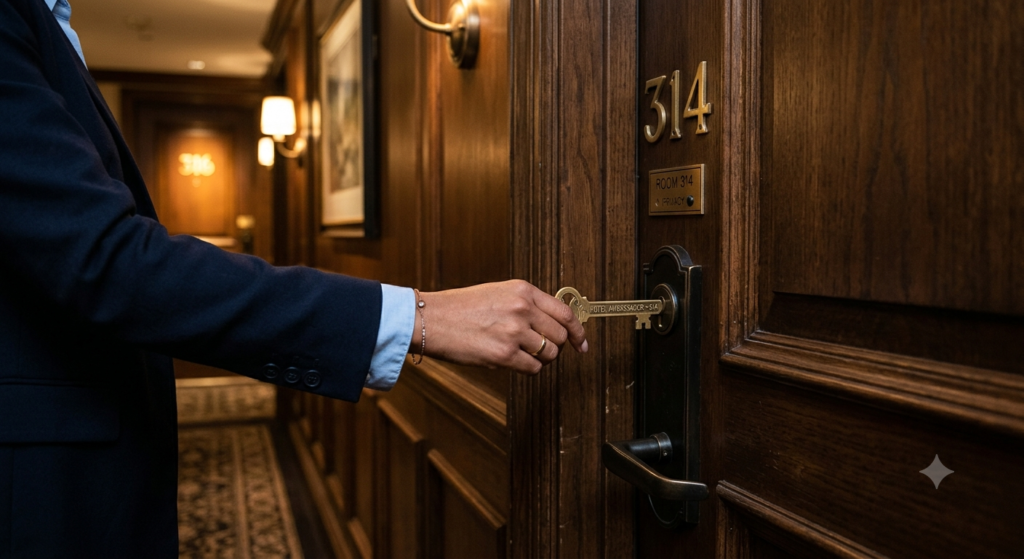
Checking into a hotel should feel like the start of a relaxing getaway or a successful business trip. However, security experts—including former intelligence officers and military personnel—warn that a hotel room is one of the most vulnerable points in a traveler’s journey.
From sneaky data breaches to physical security gaps, protecting yourself requires a mix of situational awareness and simple, proactive habits. These 10 hotel safety tips from travel security experts will help ensure your next stay is completely secure.
Before You Arrive
1. The “Goldilocks” Floor Selection
When booking or checking in, always request a room between the 3rd and 6th floors. Security experts agree this is the safety sweet spot. Ground floor and second-floor rooms are highly susceptible to quick, opportunistic break-ins. Conversely, anything above the sixth floor is often out of reach for standard municipal fire department ladder trucks in an emergency.
2. The Silent Check-In Protocol
When the front desk clerk is checking you in, your room number should never be announced out loud. If the clerk says, “Here is your key for Room 412,” politely ask for a different room. Anyone standing in the lobby now knows exactly where you are sleeping. Instead, ask them to discreetly point to or write down the room number.
Upon Entering the Room
3. Conduct a 60-Second “Clearance Sweep”
Before you unpack or kick off your shoes, keep the hotel room door propped open with your heavy luggage and perform a quick security sweep. Check behind the curtains, inside the bathroom/shower, and under the bed to ensure the room is truly empty.
4. Verify the Locks and Hardware
Test every window, sliding door, and connecting room door to ensure they lock properly. Don’t just look at them—physically pull on them. Furthermore, check the door’s peephole. If it is damaged, loose, or clear glass that allows people to look in, cover it with a piece of tape or a sticky note.
Mastering In-Room Security
5. Deploy Layered Physical Barriers
Never rely solely on the electronic keycard lock, which can be bypassed or glitched. Always engage the manual deadbolt and the security swing latch the second you enter the room.
Expert Hack: Travel with a lightweight, alarmed rubber door wedge. Shoving this under the inside of your door while you sleep adds a physical block that sets off a loud alarm if anyone attempts to force entry.
6. Create the “Illusion of Occupancy”
When you leave your room for dinner or meetings, don’t leave it dark and silent. Keep the “Do Not Disturb” sign hanging on the outside door handle at all times. Turn on a low light and leave the TV on a standard broadcast channel at a moderate volume. To a potential thief scanning hallways for empty rooms, your space will look and sound actively occupied.
7. Mind the Window Visuals
If you can see into nearby buildings from your window, people in those buildings can see you. Keep your sheer curtains drawn during the day and blackout curtains completely shut at night. This stops anyone from tracking your schedule, identifying your valuables, or determining if you are traveling alone.
Digital and Asset Protection
8. Treat the In-Room Safe as a Deterrent, Not a Vault
While you should always put your passport, secondary credit cards, and electronics in the room safe rather than leaving them on the desk, remember that hotel safes have default override codes that staff members know. For high-value items, consider locking them inside a hard-shelled suitcase with a TSA-approved lock, or use a portable travel safe pouch secured to a heavy piece of furniture.
9. Secure Your Data on Hotel Wi-Fi
Public hotel Wi-Fi networks are notoriously insecure hotbeds for digital spoofing. Never access your bank accounts, change critical passwords, or input sensitive work data while connected to hotel Wi-Fi unless you are utilizing a trusted Virtual Private Network (VPN). If you don’t have a VPN, use your cell phone’s cellular data hotspot instead.
Emergency Preparedness
10. Map Your Exit Route Immediately
Don’t wait for a fire alarm at 2:00 AM to figure out where to go. Take 30 seconds to look at the fire evacuation map on the back of your hotel door. Walk out into the hallway and physically count the number of doors between your room and the nearest emergency exit stairwell. If a hallway fills with thick smoke, you won’t be able to see the exit signs, but you can count the doors by feel to find safety.
By incorporating these simple expert habits into your travel routine, you can take control of your environment, protect your personal data, and enjoy your trip with total peace of mind.