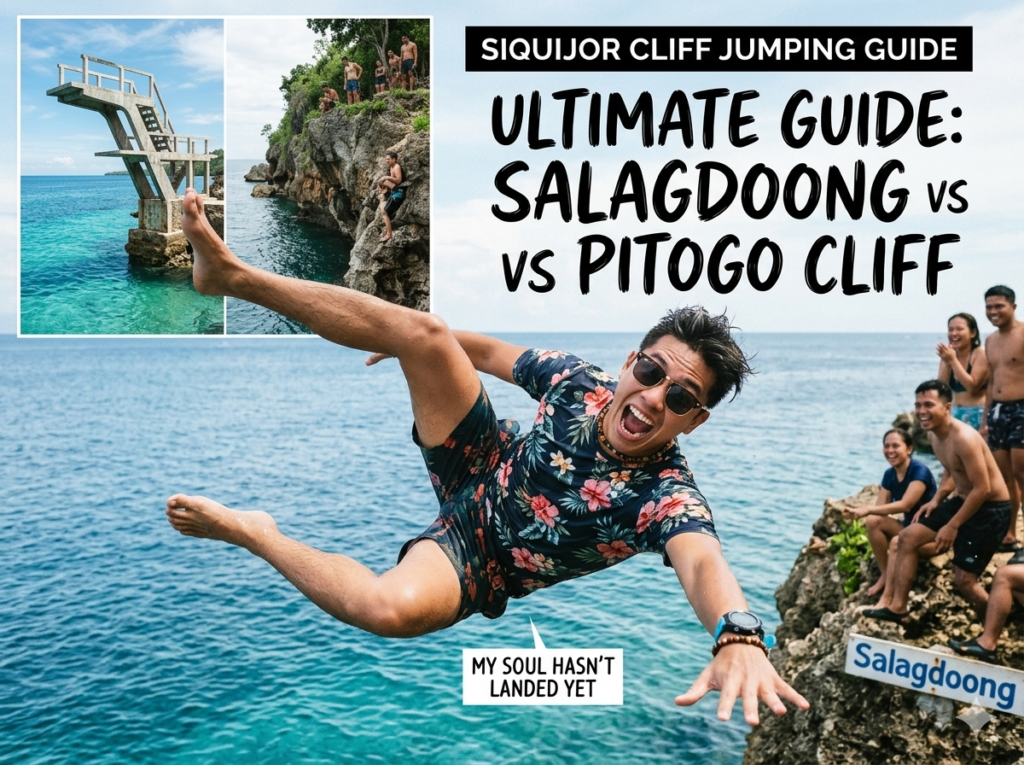

It is the classic postcard image of Siquijor Island: an adventurer launched mid-air against a brilliant backdrop of turquoise water, plunging down from a jagged limestone ledge. The island’s dramatic topography makes it an absolute mecca for cliff jumping.
But when adrenaline-seeking travelers land on the Mystic Island, they run into a major highland coastal planning problem.
Because Siquijor’s premier cliff-jumping points are located on completely opposite sides of the island and feature vastly different tidal dependencies, many tourists pick the wrong spot at the wrong time. They ride their scooters for an hour across the island only to arrive at low tide—facing exposed rocky reefs and closed platforms instead of deep water.
To save you from a wasted road trip and keep your jumps completely safe, here is the ultimate, side-by-side comparison of Siquijor’s two heavyweight jumping destinations: Salagdoong Beach and Pitogo Cliff.
1. The Classic Champion: Salagdoong Beach Cliff Jump
Located on the far eastern tip of the island in Maria, Salagdoong Beach Resort is the most famous, historically established cliff-jumping destination on Siquijor. Built directly onto a massive coral rock formation that separates two twin coves, it is instantly recognizable by its man-made concrete slides and diving boards.
The Setup & Depths
Salagdoong features two primary, well-constructed concrete jumping platforms jutting directly out over the water.
- The Lower Ledge: 7 meters (approx. 23 feet)
- The High Platform: 11 meters (approx. 36 feet)
The Catch: Current Status
⚠️ Traveler Advisory (2026): The government-run Salagdoong Beach Resort has experienced intermittent operational closures for rehabilitation and storm damage repair over recent seasons. While local operators frequently allow shore and rock access, the structural integrity of the high concrete slides can change. Always check with the municipal tourism office or your hotel front desk in San Juan before driving out to ensure the platforms are actively open and staffed by local lifeguards.
2. The Wild Challenger: Pitogo Cliff
If Salagdoong is the structured, commercial resort experience, Pitogo Cliff is its raw, untamed, and exhilarating younger sibling. Located on the rugged southern coastline in Lazi, Pitogo is an independent, locally managed eco-destination that bypasses the resort fluff in favor of pure, jaw-dropping natural beauty.
The Setup & Depths
Pitogo Cliff trades concrete diving boards for natural, hand-carved limestone ledges and a rustic bamboo launching pad.
- The Jumps: Range dynamically from a approachable 4 meters (13 feet) up to a heart-stopping 12 meters (40 feet).
- The Exit: Getting back up is an adventure in itself. Unlike Salagdoong’s concrete stairs, Pitogo utilizes a sturdy, vertical bamboo ladder secured directly onto the craggy rock face. It requires a bit of upper-body strength and careful footing!
The Vibe
Pitogo is famously uncrowded. It features a sweeping, uninterrupted 180-degree view of the Mindanao Sea. There is a small local kiosk at the entrance serving cold drinks, local snacks, and fresh coconuts, making it an excellent spot to hang out and watch the sunset after you have had your fill of jumping.
Side-by-Side Comparison: Which One Should You Choose?
| Feature | Salagdoong Beach | Pitogo Cliff |
| Location | Maria (East Coast) | Lazi (South Coast) |
| Platform Style | Man-made concrete boards | Natural limestone & bamboo |
| Max Height | 11 meters (36 feet) | 12 meters (40 feet) |
| Crowd Level | High (When fully operational) | Low to Medium (Backpacker vibe) |
| Best Tide Window | Strictly High Tide | High Tide Only |
| Entry Fee | Premium resort/environmental fees | Minimal local community fee (~PHP 30-50) |
The Golden Rules of Siquijor Cliff Jumping
To ensure your island adventure is memorable for the right reasons, never compromise on these safety rules:
- Download a Tide App: This is the absolute single most important step. Both spots become incredibly dangerous at low tide due to shallow water depths and exposed coral heads below. Never jump unless local guides or lifeguards confirm it is peak high tide.
- The Pencil Entry: When jumping from heights exceeding 10 meters, structural form is everything. Keep your body perfectly vertical like a pencil, cross your arms tightly over your chest, lock your legs together, and point your toes downward. Entering the water slightly angled can result in severe bruising or a painful back injury.
- Check the Depth Yourself: Conditions change with shifting sands and sea currents. Before making your first jump from the highest ledge, look down, watch other jumpers, or do a ceremonial jump from the lowest platform first to visually inspect the landing zone.