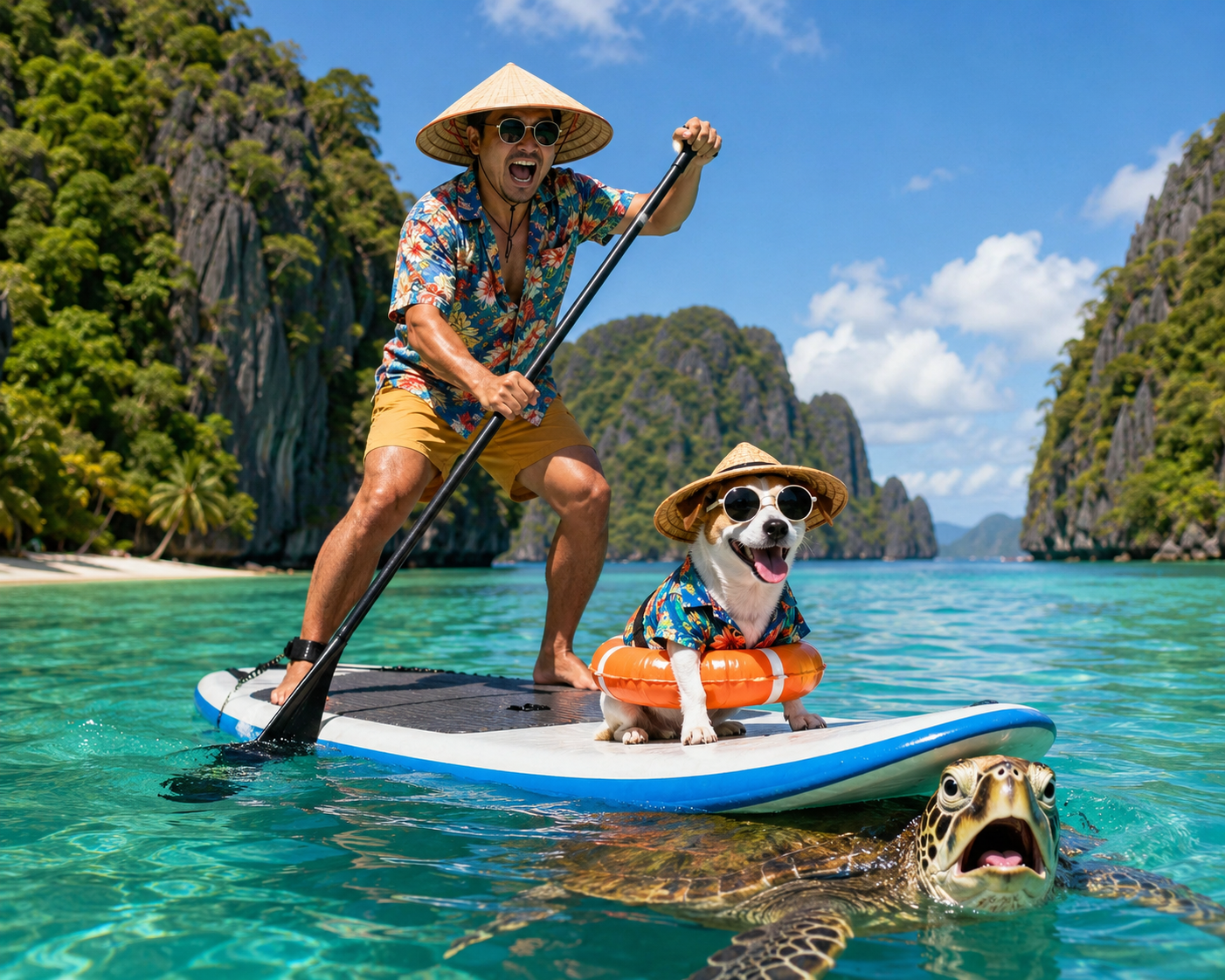
Picture this: You are standing on a polished wooden board in the middle of a glass-calm, turquoise lagoon. There is no engine noise, just the gentle lap of water against your board and the distant call of tropical birds. As you look down, you see vibrant starfish and coral gardens passing beneath your feet in high definition. You are not just visiting the ocean; you are walking on it.
Paddleboarding in the Philippines has evolved from a niche activity into the country’s most meditative and accessible water sport. While ancient Austronesian ancestors traversed these same archipelagos on traditional outrigger boats centuries ago, today’s travelers have traded heavy wood for lightweight SUP boards, turning the act of commuting between islands into an art form.
The Traveler’s Dilemma: Where To Paddle?
The biggest problem travelers face is “decision fatigue.” With over 7,000 islands, how do you choose the right spot? If you pick a surf-heavy beach, the waves will make standing up impossible. If you pick a busy port, you’ll be dodging massive cargo ships.
The secret is targeting “flat-water lagoons.” Aim for locations like El Nido (Palawan), Siargao’s Mangrove Forests, or Loboc River (Bohol). These offer the calmest conditions, ideal for beginners and photography enthusiasts.
Travel Guide And Tips
- Best Time: November to May (dry season) offers the calmest waters.
- Gear: Rent boards on-site at major beaches; they usually cost 300 to 500 pesos per hour.
- Skill Level: Start in waist-deep water. Always paddle against the wind first so you have an easy ride back to the shore.
Nearby Attractions
- El Nido: Big Lagoon and Small Lagoon.
- Siargao: Sugba Lagoon and Del Carmen Mangroves.
- Bohol: Chocolate Hills (near the paddle sites).
Transportation Tips
Use local tricycle transfers for short distances. For island hopping, join group boat tours that carry SUP boards, or hire a private boatman—it is surprisingly affordable for a half-day private charter.
Hotel Recommendation: The Paddle-Friendly Retreat
We recommend the boutique eco-resorts in Siargao, specifically near General Luna. They are best for solo travelers and couples looking for a mix of yoga, surfing, and calm-water paddleboarding.
- Pros: Direct beach access, on-site board rentals, and expert local guides.
- Cons: Can get fully booked months in advance; no massive gym facilities.
- Pricing: Mid-range, usually 2,500 to 4,500 pesos per night. Compared to the massive, sterile luxury resorts in Boracay, these offer a more authentic, community-driven vibe for a fraction of the cost.
Local Food And Tourism Tips
Eat like a local: Try “Kinilaw” (fresh raw fish marinated in vinegar) right after your session. It’s the perfect light, protein-packed post-workout meal.
Festival Schedule
If you visit Siargao in September, catch the International Surfing Cup. While the pros are on the waves, the lagoons remain perfect for peaceful paddling.
3-Day Itinerary
- Day 1: Arrival and sunset paddle to acclimate your balance.
- Day 2: Full-day lagoon exploration; pack a waterproof bag for snorkeling gear.
- Day 3: Sunrise mangrove paddle; explore secret inlets before the tour boats arrive.
Social Proof And FOMO
Don’t be the traveler who stays on the shore watching others glide through the lagoons. Everyone on social media is posting that “walk on water” photo—if you skip this, your Philippines album will be missing its most iconic shot. Join the hundreds of travelers who call this the highlight of their Southeast Asia trip.
Things To Know And Trivia
- Trivia: The Philippines has more coastline than the United States, yet only a fraction is developed for SUP.
- Tip: Always apply reef-safe sunscreen. Protecting the coral you are paddling over is part of the experience.
Frequently Asked Questions
- Do I need to know how to swim? Yes, always wear a life vest provided by the rental shop.
- Is it hard? Beginners usually find their balance within 15 minutes of kneeling.
- Can I take my phone? Only if you have a high-quality waterproof dry bag or pouch.
- What do I wear? Rash guards are better than bikinis to prevent sun exposure and chafing.
- Can kids do it? Yes, children can sit on the front of an adult’s board.